
WKYT Carolina
link New phishing scam targets Apple Pay users
— One reason customers choose Apple is the company’s commitment to privacy and security. Scammers are exploiting that trust by posing as Apple and warning customers about fraudulent Apple Pay charges. They claim that unless the customer calls immediately, they could lose their money.
New phishing scam targets Apple Pay users
— One reason customers choose Apple is the company’s commitment to privacy and security. Scammers are exploiting that trust by posing as Apple and warning customers about fraudulent Apple Pay charges. They claim that unless the customer calls immediately, they could lose their money.
The Hacker News
link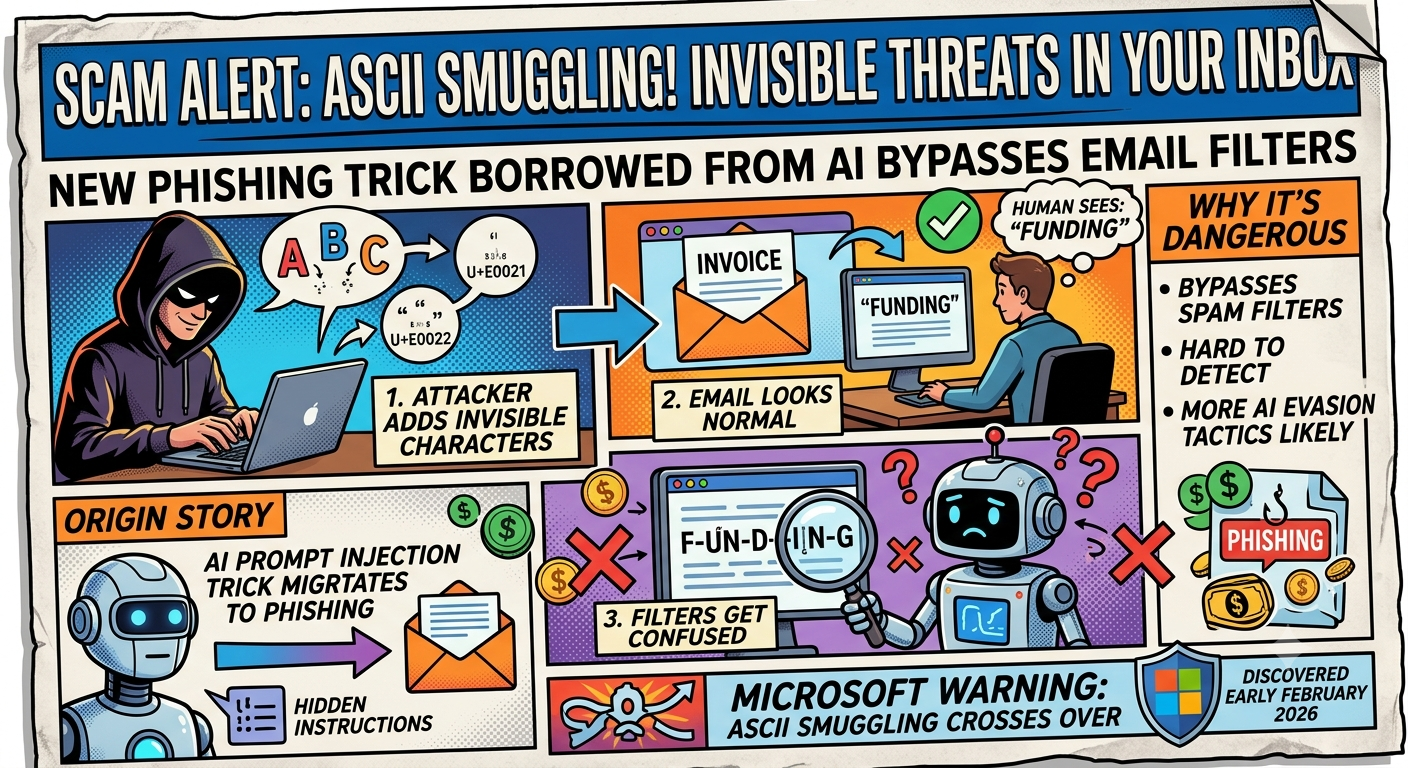 Phishing Campaign Sends Millions of Emails Using Invisible Unicode to Evade Filters
— Microsoft's security team is warning about a phishing campaign, first spotted in early February 2026, that borrows a trick from the AI world and repurposes it for old-school spam filtering evasion.
The original technique, called ASCII smuggling, uses invisible Unicode "tag" characters (special characters that don't render or show up visually to a human reading the text) to hide content inside normal-looking messages. It first became known as a way to sneak hidden instructions to AI models, since a person looking at the text would see nothing unusual while an AI system processing the same text could pick up the concealed content.
What Microsoft found is a twist on that idea. Rather than hiding instructions for an AI, these attackers are using the same invisible characters to break up suspicious words, things like "funding", so that automated email filters can't recognize them as a whole word and flag the message as spam or phishing. Since the invisible characters don't display, the email still looks completely normal to the person reading it, but the "word" behind the scenes is now fragmented and unreadable to filters scanning for known phishing or financial-fraud keywords.
Microsoft's broader point is that this shows evasion techniques developed for tricking AI systems are migrating into ordinary phishing and spam campaigns, not just AI-specific attacks, and defenders should expect that crossover to continue.
Sources: Microsoft Security Blog: "ASCII Smuggling" crosses over from AI prompt injection to phishing evasion
Phishing Campaign Sends Millions of Emails Using Invisible Unicode to Evade Filters
— Microsoft's security team is warning about a phishing campaign, first spotted in early February 2026, that borrows a trick from the AI world and repurposes it for old-school spam filtering evasion.
The original technique, called ASCII smuggling, uses invisible Unicode "tag" characters (special characters that don't render or show up visually to a human reading the text) to hide content inside normal-looking messages. It first became known as a way to sneak hidden instructions to AI models, since a person looking at the text would see nothing unusual while an AI system processing the same text could pick up the concealed content.
What Microsoft found is a twist on that idea. Rather than hiding instructions for an AI, these attackers are using the same invisible characters to break up suspicious words, things like "funding", so that automated email filters can't recognize them as a whole word and flag the message as spam or phishing. Since the invisible characters don't display, the email still looks completely normal to the person reading it, but the "word" behind the scenes is now fragmented and unreadable to filters scanning for known phishing or financial-fraud keywords.
Microsoft's broader point is that this shows evasion techniques developed for tricking AI systems are migrating into ordinary phishing and spam campaigns, not just AI-specific attacks, and defenders should expect that crossover to continue.
Sources: Microsoft Security Blog: "ASCII Smuggling" crosses over from AI prompt injection to phishing evasion
AP News
link Scam Victims Seek Help Only to get Victimized Again
— An AP/FRONTLINE investigation finds that online scams in the U.S. have reached record levels, but victims often receive little help from law enforcement, banks, or government agencies, and almost never recover their stolen money. Victims can face additional financial burdens such as fees and taxes after being scammed. Worst of all, victims looking for help sometimes find themselves the victims of new scams!
Scam Victims Seek Help Only to get Victimized Again
— An AP/FRONTLINE investigation finds that online scams in the U.S. have reached record levels, but victims often receive little help from law enforcement, banks, or government agencies, and almost never recover their stolen money. Victims can face additional financial burdens such as fees and taxes after being scammed. Worst of all, victims looking for help sometimes find themselves the victims of new scams!
Los Angeles Times
link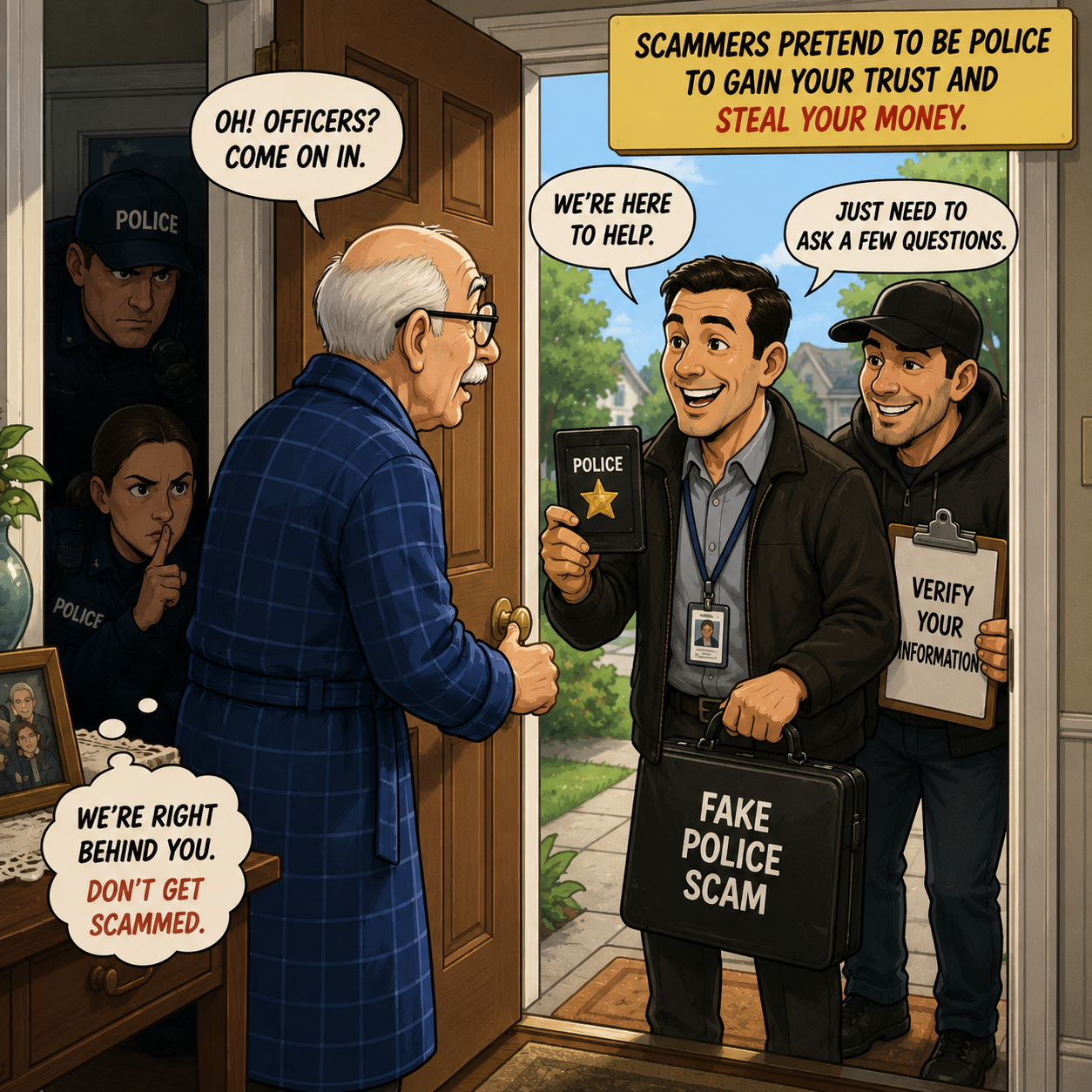 A Featured Phool Gets His Revenge Scam of elderly man goes so well, con artists strike again. But this time the Phool is ready for them.
— Two scammers stole $25,000 from a senior in Ventura County. But once they find their mark, scammers love to try again -- so they reached out a second time, but this time the victim was ready -- with the police.
The scammers now face jail time and our Featured Phool got his money back.
The moral of the story: shame is a scammer's weapon. They count on their victims to feel so much shame that they don't get help. This victim went to the police and successfully landed his scammers in jail.
A Featured Phool Gets His Revenge Scam of elderly man goes so well, con artists strike again. But this time the Phool is ready for them.
— Two scammers stole $25,000 from a senior in Ventura County. But once they find their mark, scammers love to try again -- so they reached out a second time, but this time the victim was ready -- with the police.
The scammers now face jail time and our Featured Phool got his money back.
The moral of the story: shame is a scammer's weapon. They count on their victims to feel so much shame that they don't get help. This victim went to the police and successfully landed his scammers in jail.
Vanguard
link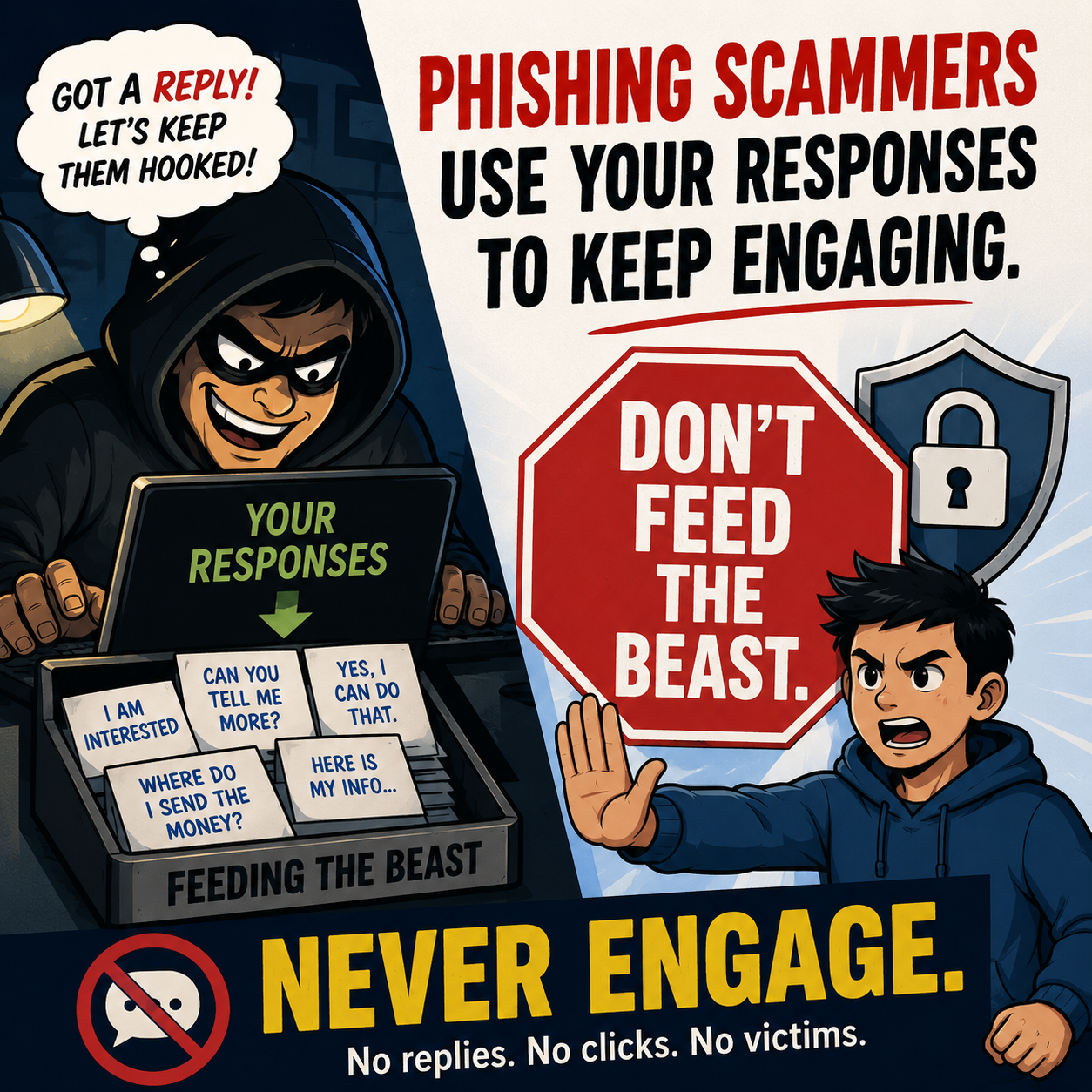 Phishing exploits the gap between tools and trust
— Experts at Vanguard describe phishing scams today in a straightforward primer.
The key insight: "While phishing is often framed as a single event, it can also mark the starting point for broader scams that evolve over time. In many cases, escalation is not driven by the message itself, but by the response—small actions that signal availability, trust, or willingness to continue the exchange."
The most effective way to avoid being phished is to never engage. Don't respond and feed the interaction.
Phishing exploits the gap between tools and trust
— Experts at Vanguard describe phishing scams today in a straightforward primer.
The key insight: "While phishing is often framed as a single event, it can also mark the starting point for broader scams that evolve over time. In many cases, escalation is not driven by the message itself, but by the response—small actions that signal availability, trust, or willingness to continue the exchange."
The most effective way to avoid being phished is to never engage. Don't respond and feed the interaction.
WAKA 8 Action News
link What The Tech: Young People Engage with Scams Even More Than Seniors
— Seniors may be losing the most money, but it's actually young people who are engaging with scams the most. Shopping scams, employment scams, and romance scams are at the top of the list for scam attempts hooking young victims.
What The Tech: Young People Engage with Scams Even More Than Seniors
— Seniors may be losing the most money, but it's actually young people who are engaging with scams the most. Shopping scams, employment scams, and romance scams are at the top of the list for scam attempts hooking young victims.
FBI
link FBI Norfolk Warns of Romance Scams, Urges Public to Recognize Red Flags Ahead of Valentine’s Day
— “Romance scams are especially devastating because they exploit trust and emotion."
FBI Norfolk Warns of Romance Scams, Urges Public to Recognize Red Flags Ahead of Valentine’s Day
— “Romance scams are especially devastating because they exploit trust and emotion."
www.digit.fyi
link CEOs Bracing For An Explosion of Cyber-Fraud in 2026, Finds WEF
— According to the World Economic Forum’s Global Cybersecurity Outlook 2026, cyber-enabled fraud—particularly phishing, identity theft, and insider threats—will overtake ransomware as the biggest threat.
CEOs Bracing For An Explosion of Cyber-Fraud in 2026, Finds WEF
— According to the World Economic Forum’s Global Cybersecurity Outlook 2026, cyber-enabled fraud—particularly phishing, identity theft, and insider threats—will overtake ransomware as the biggest threat.
AARP.ORG
link AARP Fraud Watch Warns Seniors to Be Especially Vigilant During the Holidays
— A new report from the AARP Fraud Watch Network warns that as the holidays approach and millions of people prepare to shop and donate online, scammers are preparing to capitalize. Fake shipping alerts, bogus charities, and gift card scams are just a few of the ways that scammers hope to steal your money and your personal information.
AARP Fraud Watch Warns Seniors to Be Especially Vigilant During the Holidays
— A new report from the AARP Fraud Watch Network warns that as the holidays approach and millions of people prepare to shop and donate online, scammers are preparing to capitalize. Fake shipping alerts, bogus charities, and gift card scams are just a few of the ways that scammers hope to steal your money and your personal information.
University of Colorado Boulder
link How to Avoid Scams in the Age of AI
— AI can be a powerful tool -- even for scammers. A cybersecurity expert provides tips to avoid falling victim.
How to Avoid Scams in the Age of AI
— AI can be a powerful tool -- even for scammers. A cybersecurity expert provides tips to avoid falling victim.