
The Hacker News
link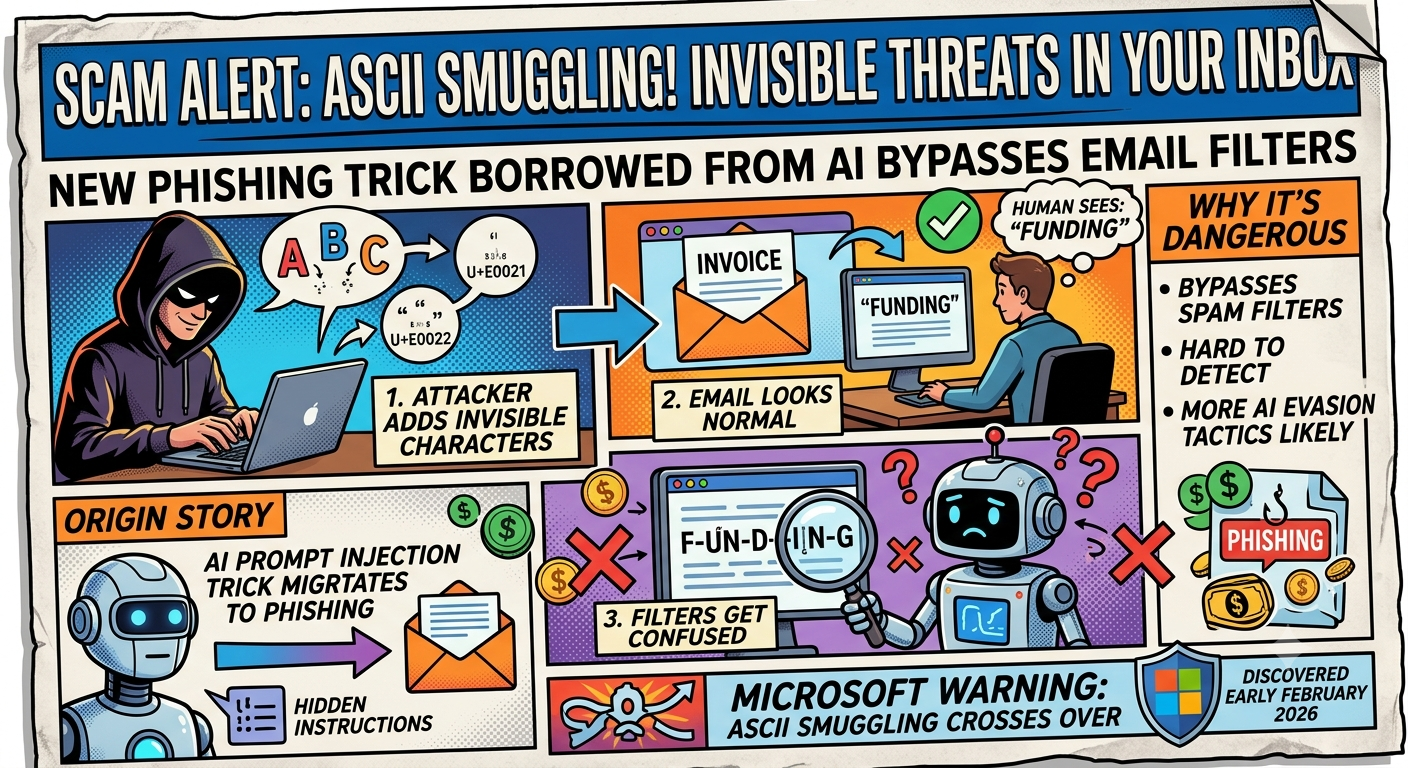 Phishing Campaign Sends Millions of Emails Using Invisible Unicode to Evade Filters
— Microsoft's security team is warning about a phishing campaign, first spotted in early February 2026, that borrows a trick from the AI world and repurposes it for old-school spam filtering evasion.
The original technique, called ASCII smuggling, uses invisible Unicode "tag" characters (special characters that don't render or show up visually to a human reading the text) to hide content inside normal-looking messages. It first became known as a way to sneak hidden instructions to AI models, since a person looking at the text would see nothing unusual while an AI system processing the same text could pick up the concealed content.
What Microsoft found is a twist on that idea. Rather than hiding instructions for an AI, these attackers are using the same invisible characters to break up suspicious words, things like "funding", so that automated email filters can't recognize them as a whole word and flag the message as spam or phishing. Since the invisible characters don't display, the email still looks completely normal to the person reading it, but the "word" behind the scenes is now fragmented and unreadable to filters scanning for known phishing or financial-fraud keywords.
Microsoft's broader point is that this shows evasion techniques developed for tricking AI systems are migrating into ordinary phishing and spam campaigns, not just AI-specific attacks, and defenders should expect that crossover to continue.
Sources: Microsoft Security Blog: "ASCII Smuggling" crosses over from AI prompt injection to phishing evasion
Phishing Campaign Sends Millions of Emails Using Invisible Unicode to Evade Filters
— Microsoft's security team is warning about a phishing campaign, first spotted in early February 2026, that borrows a trick from the AI world and repurposes it for old-school spam filtering evasion.
The original technique, called ASCII smuggling, uses invisible Unicode "tag" characters (special characters that don't render or show up visually to a human reading the text) to hide content inside normal-looking messages. It first became known as a way to sneak hidden instructions to AI models, since a person looking at the text would see nothing unusual while an AI system processing the same text could pick up the concealed content.
What Microsoft found is a twist on that idea. Rather than hiding instructions for an AI, these attackers are using the same invisible characters to break up suspicious words, things like "funding", so that automated email filters can't recognize them as a whole word and flag the message as spam or phishing. Since the invisible characters don't display, the email still looks completely normal to the person reading it, but the "word" behind the scenes is now fragmented and unreadable to filters scanning for known phishing or financial-fraud keywords.
Microsoft's broader point is that this shows evasion techniques developed for tricking AI systems are migrating into ordinary phishing and spam campaigns, not just AI-specific attacks, and defenders should expect that crossover to continue.
Sources: Microsoft Security Blog: "ASCII Smuggling" crosses over from AI prompt injection to phishing evasion
AP News
link Scam Victims Seek Help Only to get Victimized Again
— An AP/FRONTLINE investigation finds that online scams in the U.S. have reached record levels, but victims often receive little help from law enforcement, banks, or government agencies, and almost never recover their stolen money. Victims can face additional financial burdens such as fees and taxes after being scammed. Worst of all, victims looking for help sometimes find themselves the victims of new scams!
Scam Victims Seek Help Only to get Victimized Again
— An AP/FRONTLINE investigation finds that online scams in the U.S. have reached record levels, but victims often receive little help from law enforcement, banks, or government agencies, and almost never recover their stolen money. Victims can face additional financial burdens such as fees and taxes after being scammed. Worst of all, victims looking for help sometimes find themselves the victims of new scams!
Atlanta News First
link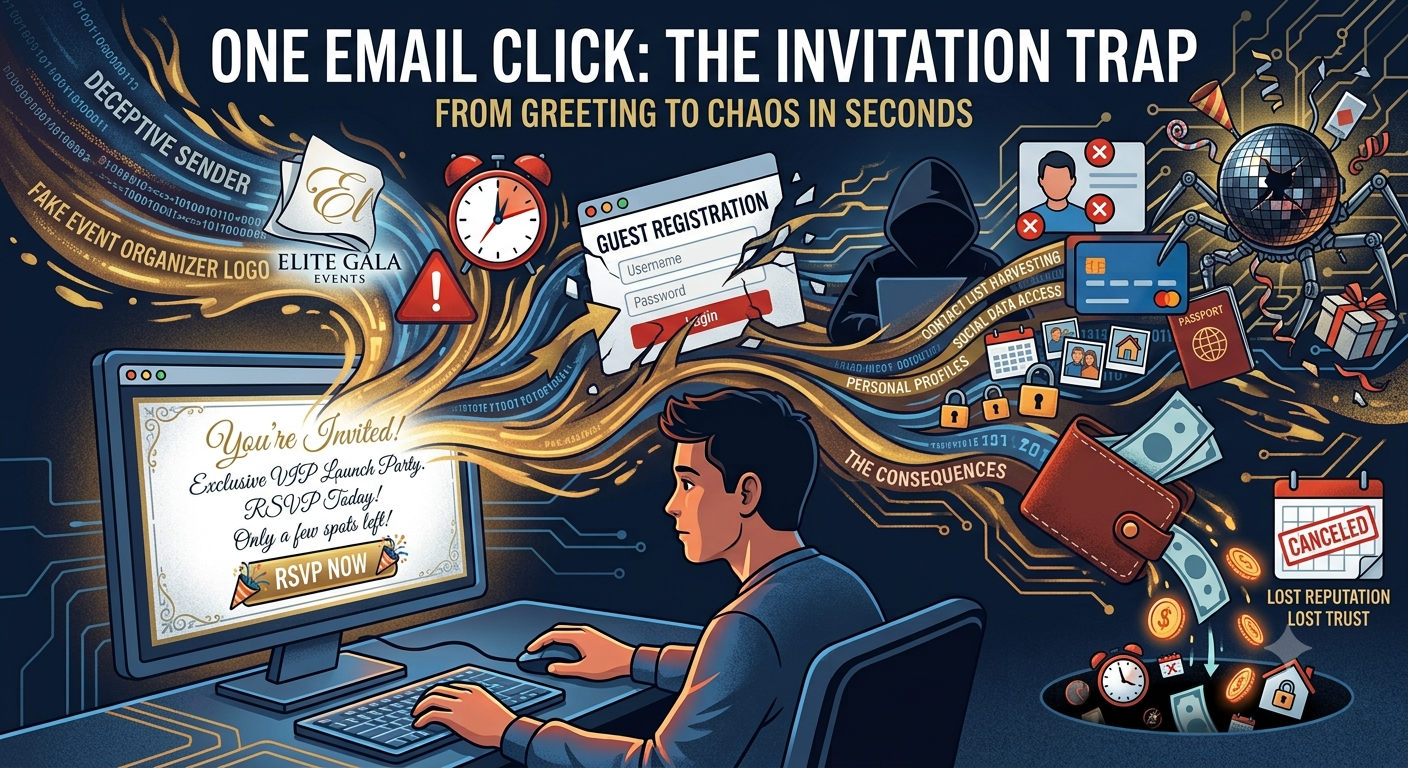 Phishing scams disguised as party invitations target email accounts
— ATLANTA, Ga. (Atlanta News First) - As weddings, end-of-summer and fall holiday gatherings fill calendars, federal investigators are warning that scammers are disguising phishing attempts as online invitations, messages that can look polished, name a familiar host and even appear to arrive from a friend’s real email address.
The Federal Trade Commission (FTC) has issued a consumer alert about unexpected messages impersonating well-known invitation platforms such as Evite and Paperless Post. The messages prompt recipients to enter an email address and password to view event details, or ask for a phone number and a one-time code to RSVP. The FTC said that is not how legitimate invitations work.
Phishing scams disguised as party invitations target email accounts
— ATLANTA, Ga. (Atlanta News First) - As weddings, end-of-summer and fall holiday gatherings fill calendars, federal investigators are warning that scammers are disguising phishing attempts as online invitations, messages that can look polished, name a familiar host and even appear to arrive from a friend’s real email address.
The Federal Trade Commission (FTC) has issued a consumer alert about unexpected messages impersonating well-known invitation platforms such as Evite and Paperless Post. The messages prompt recipients to enter an email address and password to view event details, or ask for a phone number and a one-time code to RSVP. The FTC said that is not how legitimate invitations work.
AL.com
link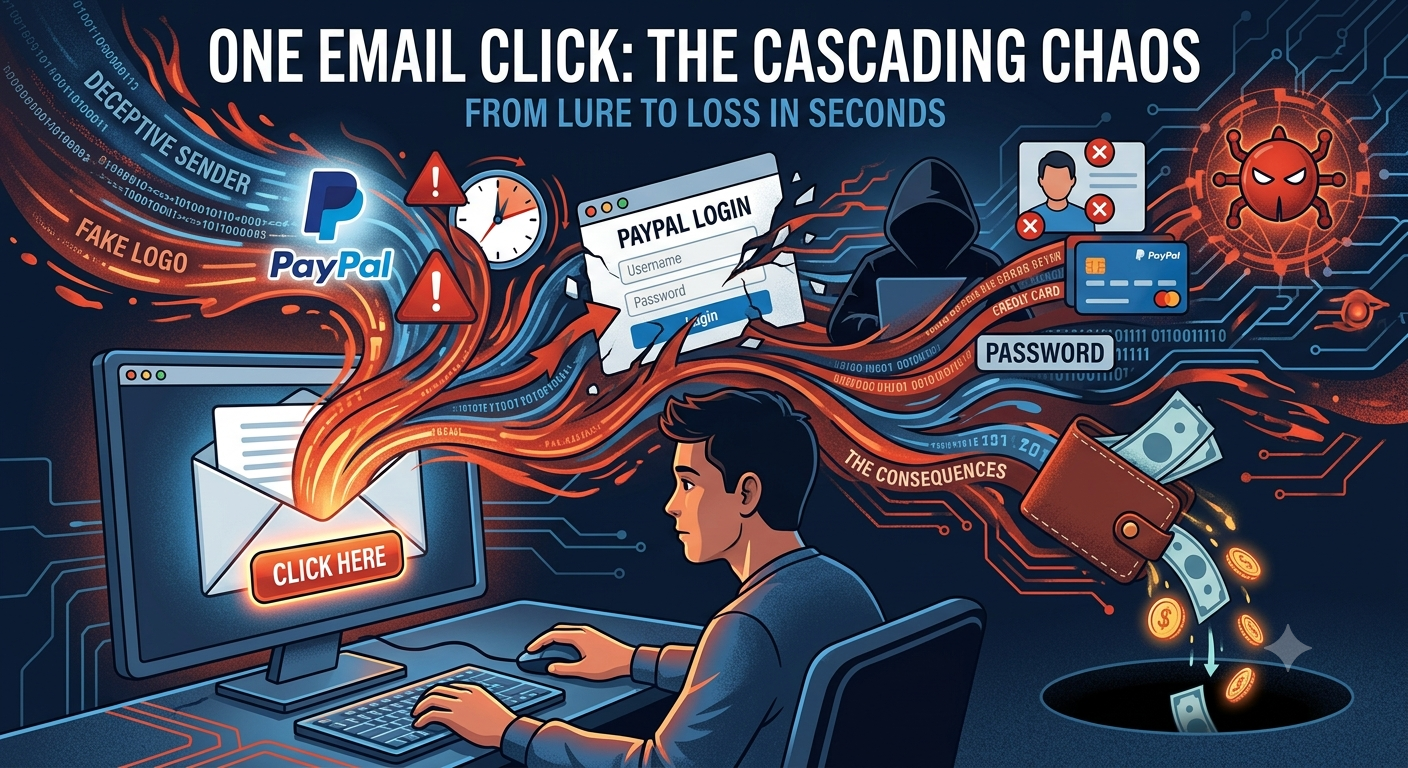 FBI warns that clicking one link can give scammers full access to your email
— A new scam that starts with a legitimate login can give malicious cyber actors access to your email even after you’ve changed your password. According to a warning issued Tuesday by the FBI, the scam is known as “OAuth consent phishing” and is targeting people across the country.
OAuth is an often used and legitimate permission screen used by services like Google and Microsoft. The feature gives apps the ability to access a user’s data without the user providing sign-in credentials or a password.
FBI warns that clicking one link can give scammers full access to your email
— A new scam that starts with a legitimate login can give malicious cyber actors access to your email even after you’ve changed your password. According to a warning issued Tuesday by the FBI, the scam is known as “OAuth consent phishing” and is targeting people across the country.
OAuth is an often used and legitimate permission screen used by services like Google and Microsoft. The feature gives apps the ability to access a user’s data without the user providing sign-in credentials or a password.
Fast Company
link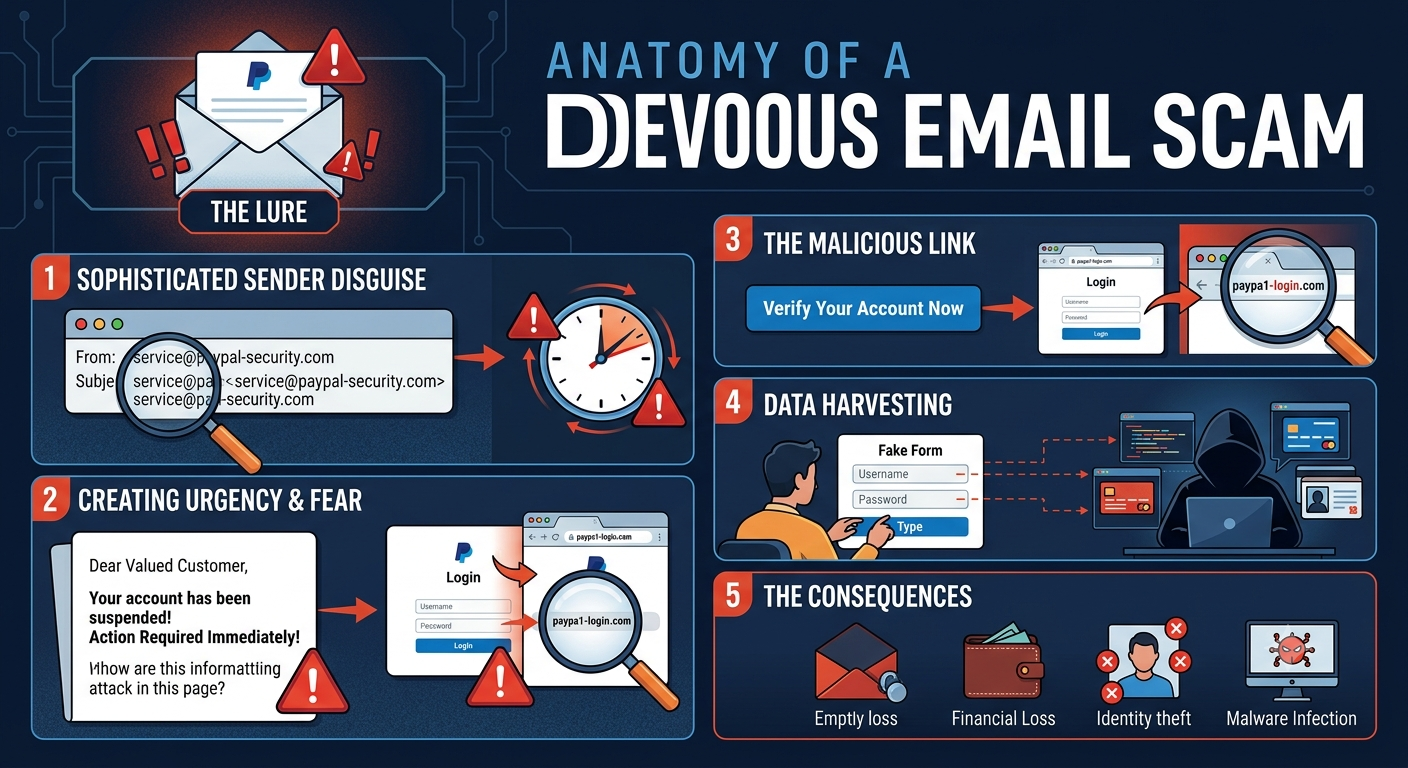 4 devious email scams hitting inboxes right now, and how to spot them
— For the last decade, email scams have run rampant on the internet. And corporate IT departments have handed out the exact same advice like clockwork: Look for bad grammar, hover over links, and turn on two-factor authentication.
But those recommendations have fallen behind the times. Thanks to AI and clever architectural work-arounds, today’s email scams don’t look like scams. They don’t contain spelling errors. And in many cases, they don’t even care if you have 2FA enabled.
4 devious email scams hitting inboxes right now, and how to spot them
— For the last decade, email scams have run rampant on the internet. And corporate IT departments have handed out the exact same advice like clockwork: Look for bad grammar, hover over links, and turn on two-factor authentication.
But those recommendations have fallen behind the times. Thanks to AI and clever architectural work-arounds, today’s email scams don’t look like scams. They don’t contain spelling errors. And in many cases, they don’t even care if you have 2FA enabled.
ABC News
link FTC warns about email scam masking as party invitations
— The Federal Trade Commission is warning partygoers everywhere about a new phishing scam involving event invitations.
In a May 26 blog post, the FTC sounded the alarm on "You’re invited" texts and emails that are actually phishing scams.
"Scammers send unexpected messages that look like they're from well-known invitation platforms like Evite or Paperless Post," the FTC post says. The invitation may then ask users to share login credentials, according to the warning.
FTC warns about email scam masking as party invitations
— The Federal Trade Commission is warning partygoers everywhere about a new phishing scam involving event invitations.
In a May 26 blog post, the FTC sounded the alarm on "You’re invited" texts and emails that are actually phishing scams.
"Scammers send unexpected messages that look like they're from well-known invitation platforms like Evite or Paperless Post," the FTC post says. The invitation may then ask users to share login credentials, according to the warning.
Fast Company
link The FBI just issued an urgent warning for anyone using Microsoft Teams, Outlook, or OneDrive over a new phishing scheme
— The security measure millions rely on to protect their accounts may not be as foolproof as they think.
The Federal Bureau of Investigation is warning the public about a fast-spreading scam targeting users of popular Microsoft 365 products, including Outlook, Teams, and OneDrive. The scheme allows cybercriminals to capture Microsoft authentication tokens, bypassing multifactor authentication without needing a user’s password.
The FBI just issued an urgent warning for anyone using Microsoft Teams, Outlook, or OneDrive over a new phishing scheme
— The security measure millions rely on to protect their accounts may not be as foolproof as they think.
The Federal Bureau of Investigation is warning the public about a fast-spreading scam targeting users of popular Microsoft 365 products, including Outlook, Teams, and OneDrive. The scheme allows cybercriminals to capture Microsoft authentication tokens, bypassing multifactor authentication without needing a user’s password.
Vanguard
link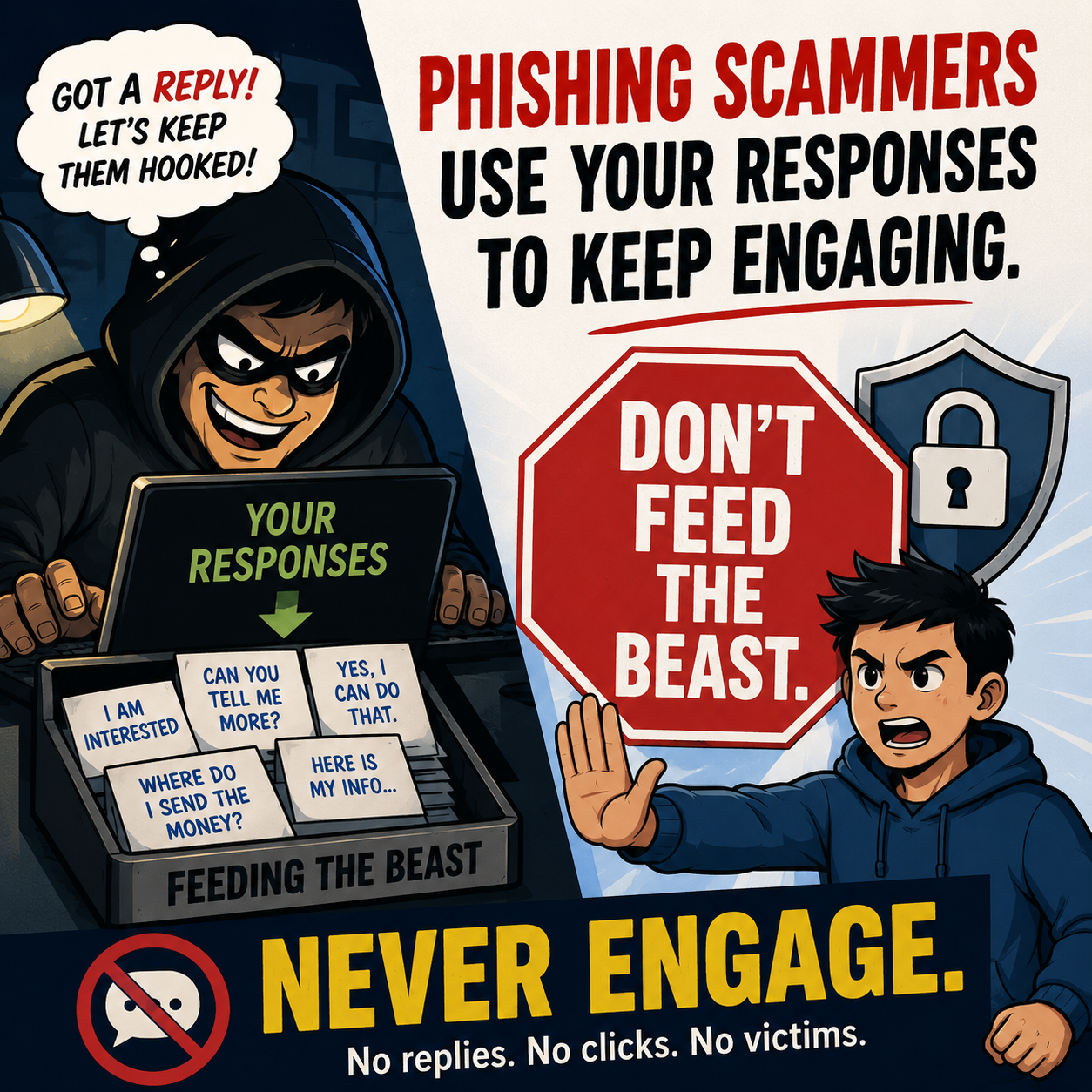 Phishing exploits the gap between tools and trust
— Experts at Vanguard describe phishing scams today in a straightforward primer.
The key insight: "While phishing is often framed as a single event, it can also mark the starting point for broader scams that evolve over time. In many cases, escalation is not driven by the message itself, but by the response—small actions that signal availability, trust, or willingness to continue the exchange."
The most effective way to avoid being phished is to never engage. Don't respond and feed the interaction.
Phishing exploits the gap between tools and trust
— Experts at Vanguard describe phishing scams today in a straightforward primer.
The key insight: "While phishing is often framed as a single event, it can also mark the starting point for broader scams that evolve over time. In many cases, escalation is not driven by the message itself, but by the response—small actions that signal availability, trust, or willingness to continue the exchange."
The most effective way to avoid being phished is to never engage. Don't respond and feed the interaction.
WABC 7 On Your Side
link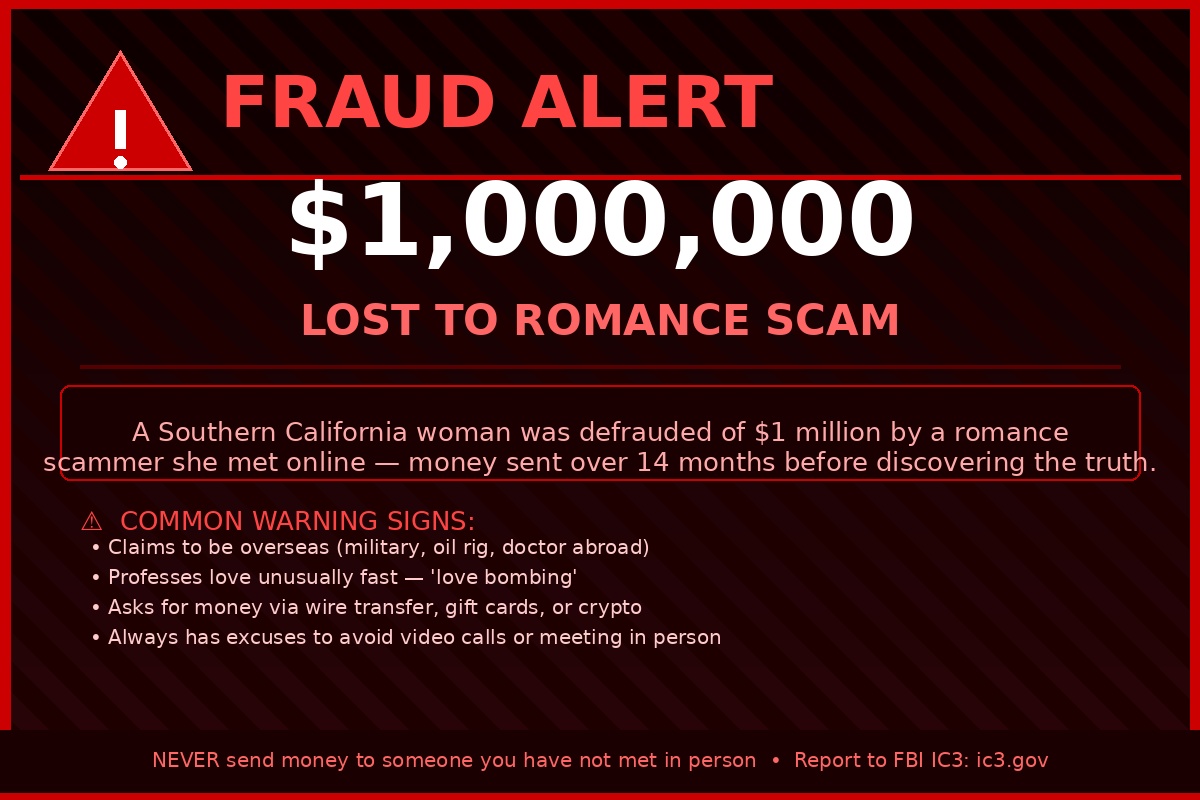 Woman loses nearly $1M in romance scam, shares red flags she missed | 7 On Your Side
— CONNECTICUT (WABC) -- Valentine's Day is next Friday! So, if you're single and looking for love, you may be trying to find your soulmate online.
It's one of the top ways to connect, but unfortunately, dating apps are another avenue for online scammers to take advantage of others looking for romance.
Romance scams are all over the headlines, often involving international rings of criminals to trick victims into sending them a lot of money.
Who doesn't want to be loved? These types of scams are so successful because many of us are vulnerable, and it's not a quick, hit send me money for a plane ticket, and then they disappear.
Woman loses nearly $1M in romance scam, shares red flags she missed | 7 On Your Side
— CONNECTICUT (WABC) -- Valentine's Day is next Friday! So, if you're single and looking for love, you may be trying to find your soulmate online.
It's one of the top ways to connect, but unfortunately, dating apps are another avenue for online scammers to take advantage of others looking for romance.
Romance scams are all over the headlines, often involving international rings of criminals to trick victims into sending them a lot of money.
Who doesn't want to be loved? These types of scams are so successful because many of us are vulnerable, and it's not a quick, hit send me money for a plane ticket, and then they disappear.
Cnet
link Online Job Scams Are on the Rise, and Gen Z Is Struggling With Them, Study Says
— There are a lot of factors contributing to the hellscape that is the current job market: few open roles, fierce competition, AI automation and terrible global economic conditions, to name just a few. And it's increasingly a minefield, where promising-looking postings might really just be scams.
Online Job Scams Are on the Rise, and Gen Z Is Struggling With Them, Study Says
— There are a lot of factors contributing to the hellscape that is the current job market: few open roles, fierce competition, AI automation and terrible global economic conditions, to name just a few. And it's increasingly a minefield, where promising-looking postings might really just be scams.